Reclaiming ground that's gotten away
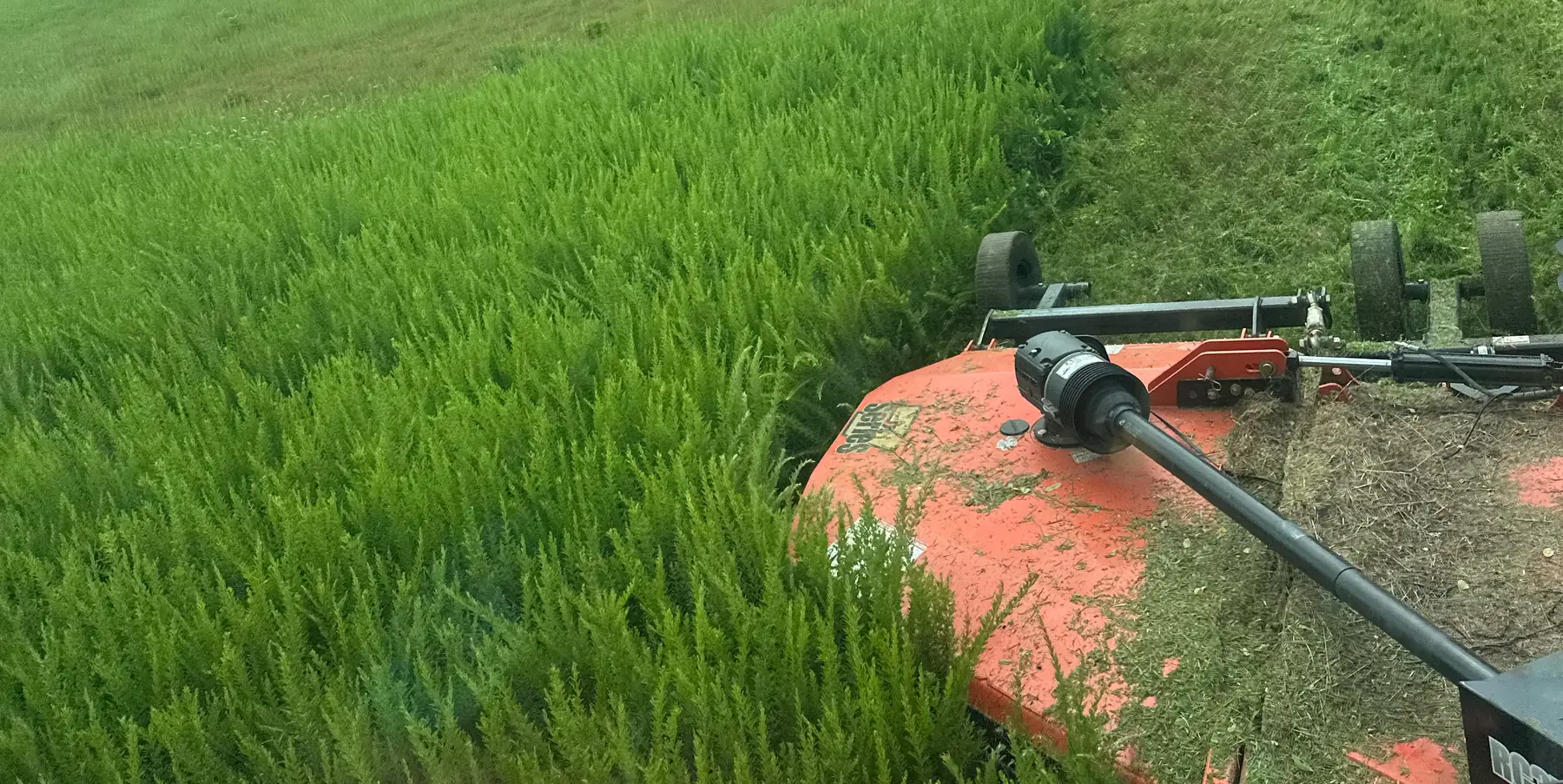
A field left alone for a season or two fills in with tall grass, thistle, briars and young brush. A rotary cutter, often called a bush hog, is built for exactly that kind of growth. Brush hogging knocks it down and chops it up so the ground can go back to pasture, hay, a building site or regular mowing. We brush hog for farms, landowners, investors, developers and property managers across Maryland.
Where brush hogging fits
- Neglected fields and pasture. Reclaiming ground that has grown up in weeds and brush.
- Vacant land and investment parcels. Getting a lot or acreage cleaned up and walkable before a sale or survey.
- Field edges and headlands. Pushing back growth creeping in from the woods line.
- Trails and access paths. Opening up paths across open ground.
- Seasonal knock-down. An annual or twice-a-year cut to keep rough ground from turning to brush.
Brush hogging, mulching or mowing?
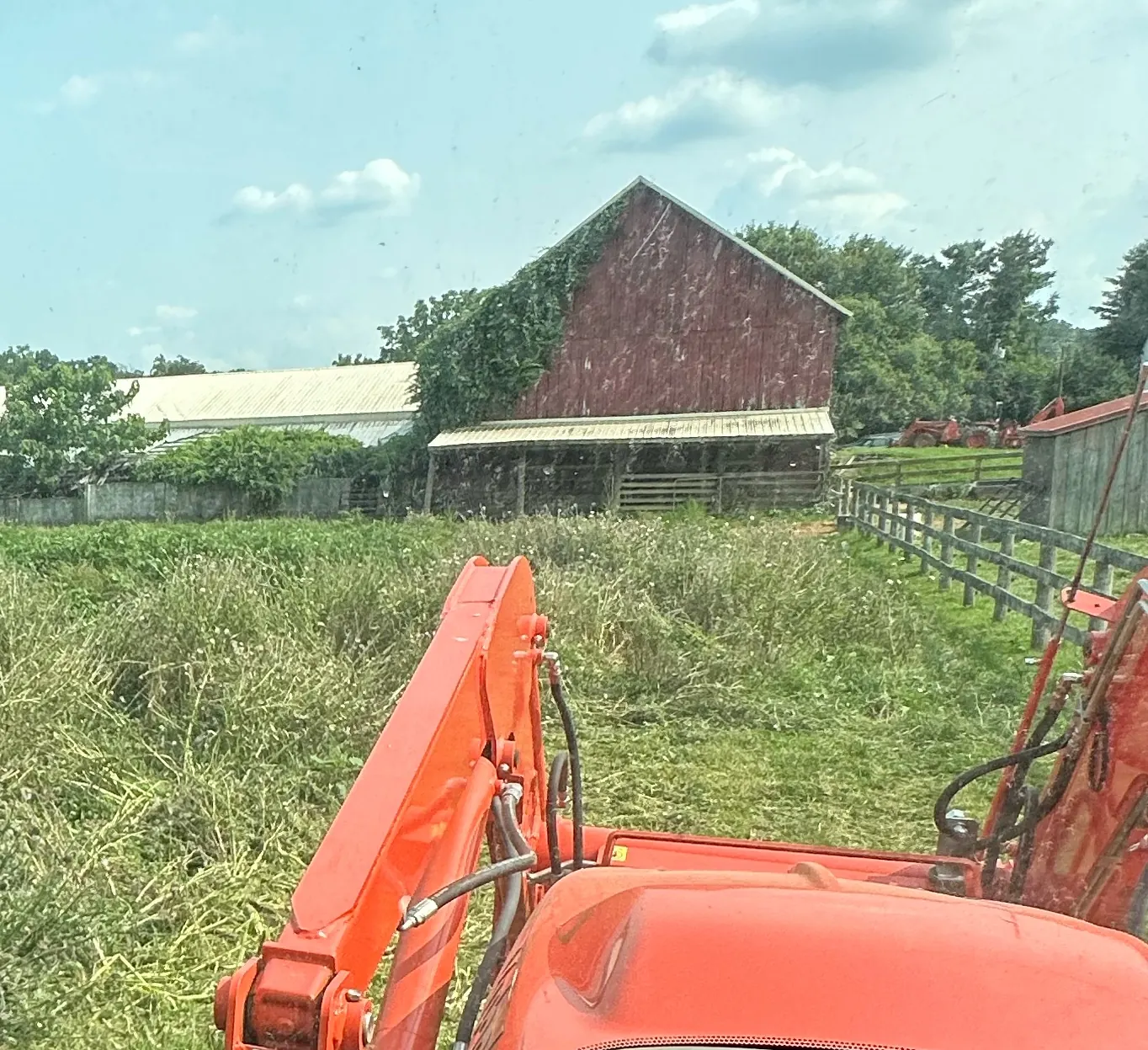
Each tool has its place. Brush hogging handles tall grass, weeds, briars and light brush. When woody growth has taken over, forestry mulching grinds heavier brush and overgrowth in place. Once the ground is reclaimed, regular field and pasture mowing keeps it clean. We'll recommend the right approach after looking at the property, and on many jobs we combine them.
Safety and site walk
Overgrown fields hide things: old fencing and wire, buried posts, rocks, washouts and junk. Before we cut, we talk through what's known on the property and walk it when needed, so obstacles get flagged and the equipment and the ground both come through intact. Let us know about wells, septic areas, utilities and anything else we should stay clear of.
Next steps
Send the location, approximate acreage, how tall the growth is and how long it's been since the last cut. Photos help a lot. We'll send a written quote. If the job also needs fence-line clearing or debris haul-off, we can include it.