
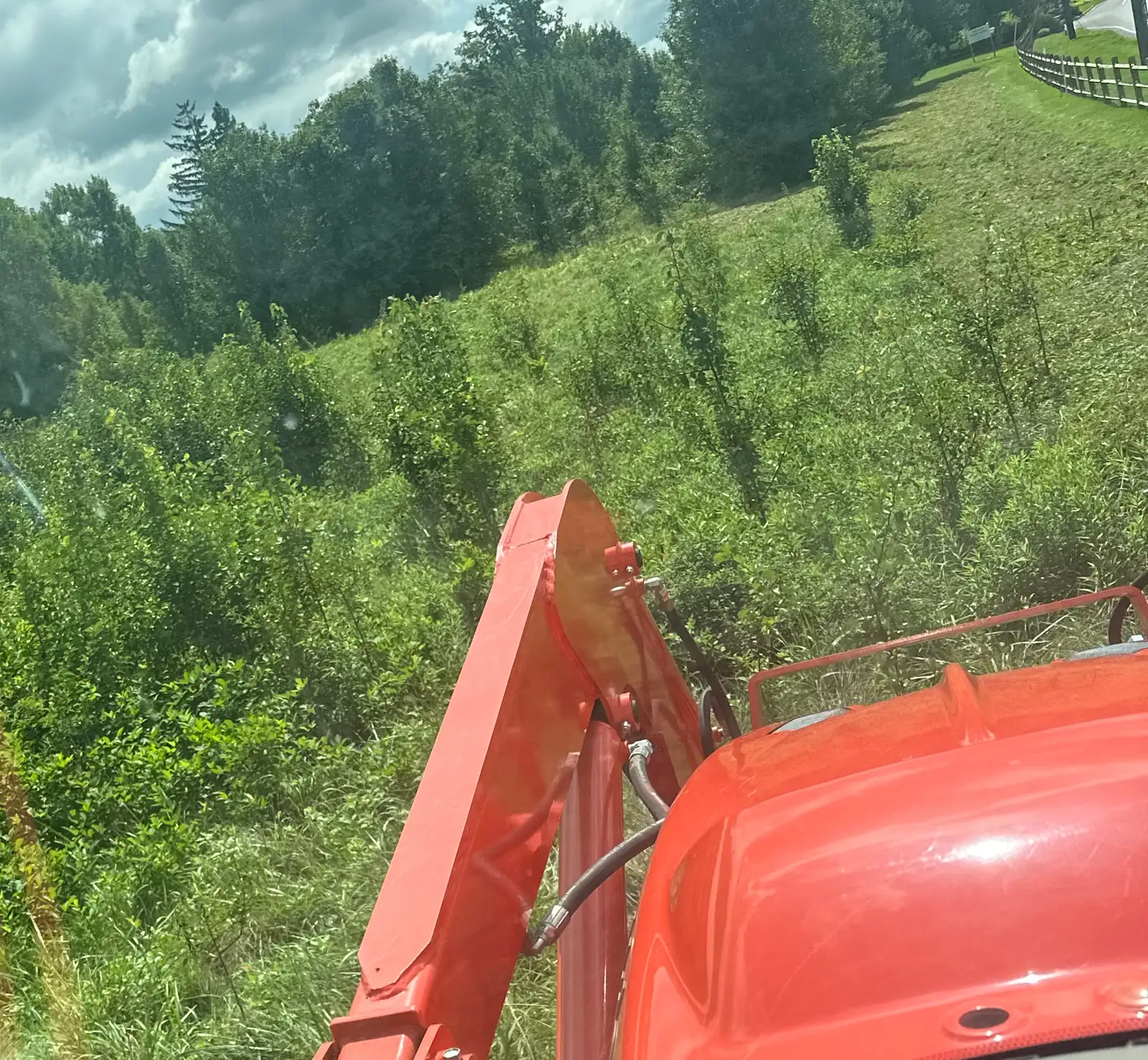
Clearing without the brush piles
Conventional clearing pushes brush into piles that then have to be burned, ground or hauled away, and it often strips topsoil in the process. Forestry mulching takes a different approach: a mulching head grinds brush and woody overgrowth where it stands and leaves it as a layer of mulch on the ground. For many jobs that means fewer steps, less hauling and a cleaner result.
Why landowners and developers choose mulching
- Less soil disturbance. The root mat and topsoil stay largely in place, which helps on slopes and near streams.
- Mulch layer left behind. The ground cover helps hold soil and slows regrowth.
- Less haul-off. Material stays on site instead of filling trucks.
- Selective work. We can clear underneath and around the trees you want to keep.
Common forestry mulching jobs
- Overgrown lots and acreage being reclaimed or prepared for sale.
- Field edges and woods lines that have crept into usable ground.
- Trails, access paths and hunting lanes.
- Fence lines and property boundaries ahead of survey or fence work.
- Invasive thickets such as multiflora rose, autumn olive and bush honeysuckle.
Working to your limits
We work to the limits you set and mark on the ground, and on development sites to the approved plan and limits of disturbance. Clearing on some properties in Maryland may be subject to forest conservation, sediment and erosion control or critical area rules, so check with your county or design professional on what approvals your project needs before work starts. When the area must be taken down to bare ground for building, we can follow up with site preparation and grading.
Related services
Lighter growth may only need brush hogging, and selective work along edges is covered under underbrush and overgrowth clearing. For full lot work, see land and lot clearing. Send us the location, the acreage and photos of the growth, and we'll send a written quote.